The start: an offer nobody could confidently compare
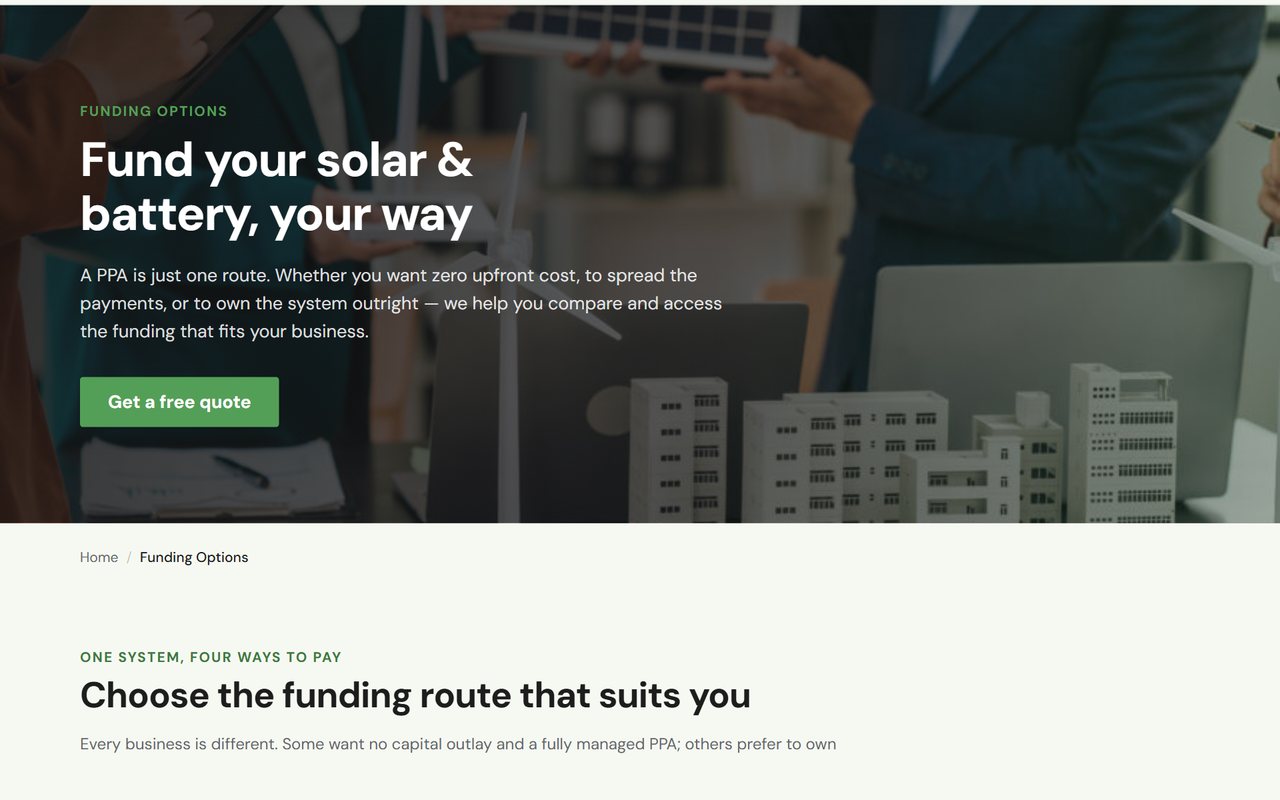
PPA Funding helps UK businesses fund commercial solar and battery storage. As an independent introducer, it connects a company with funders who install the system, often at no upfront cost, and explains the different ways to pay for it.
That last part is where the whole business lives, and it’s genuinely hard.
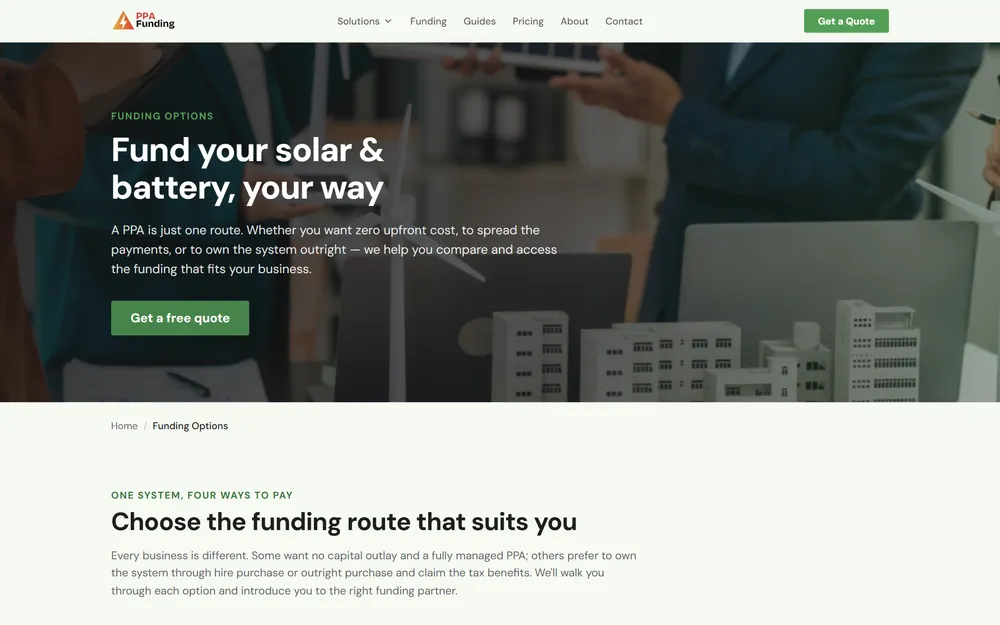
A power purchase agreement, a lease, hire purchase and outright purchase all behave completely differently. Who owns the asset, what it costs upfront, how it appears on the balance sheet, what happens at the end — all different. Most businesses looking at solar do not know which suits them, and nobody signs something they don’t understand.
Meanwhile the old site sat on a generic template that neither explained the options well nor earned any visibility. And research in this market increasingly starts with a search engine or an AI assistant, neither of which had much to work with.
So there were two problems stacked on each other: the offer was confusing, and nobody was finding the explanation anyway.
The middle: what we actually built
1. One comparison, doing most of the work
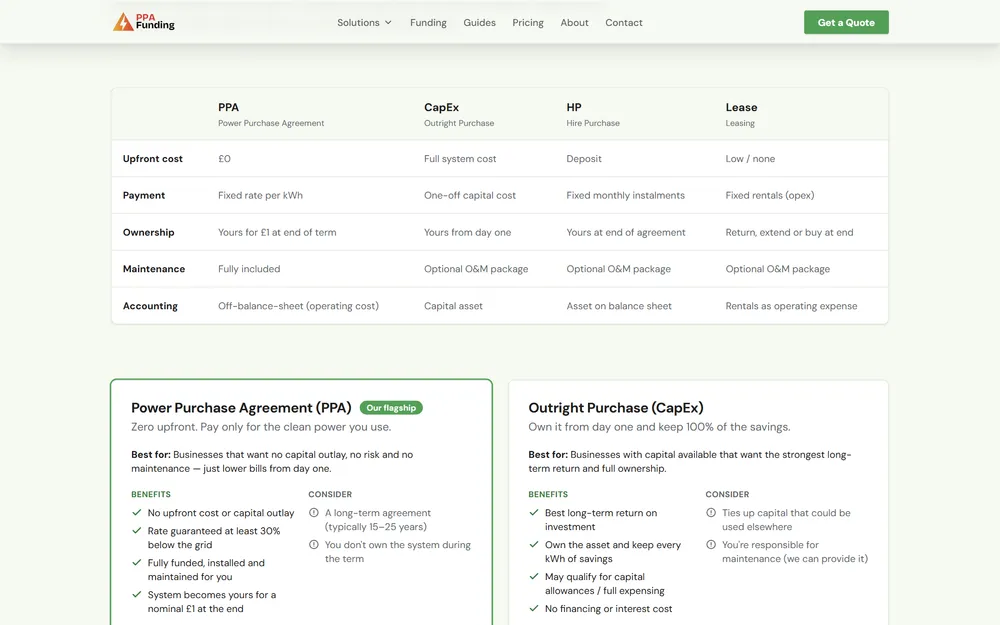
The centrepiece of the site is a single view laying the four funding routes side by side: what each costs upfront, who owns the system, and how it lands in the accounts.
That’s not decoration. When the decision itself is the obstacle, making it feel manageable is the most persuasive thing you can do — and it’s a design job as much as a writing one.
2. Answer the questions properly, thirteen times over
Real visibility comes from genuinely answering questions, so we built a proper library: thirteen educational guides, a pillar explainer on what a power purchase agreement actually is, and nine industry pages for the sectors that benefit most — manufacturing, warehousing, agriculture, cold storage, data centres and more.
Thirty-eight pages in total, each with its own title, description and share preview, each telling search engines exactly what the business is, all tied together with a clean sitemap. Unglamorous groundwork that the old template simply never had.
3. Be in the answer when someone asks an assistant
We left the AI assistants a plain-English file explaining exactly what the business does, and explicitly invited their crawlers in rather than blocking them, alongside clear business details and direct, quotable answers.
So when a finance director asks an assistant how to fund a solar installation without capital outlay, PPA Funding is written to be part of the reply rather than absent from it.
4. Know where every enquiry came from, from day one
Every enquiry posts through a protected form, and the campaign source is captured alongside it.
That ordering matters. Wire the tracking first, and the moment paid campaigns switch on, every enquiry is attributable. Do it the other way round and you spend for months, then argue about what worked.
The end: what it left them with
- A confusing product made comparable, in one clear view.
- 38 pages that Google and AI assistants can find them on.
- 13 guides and 9 industry pages, answering what buyers actually ask.
- Attribution ready before the spending starts, so paid growth can scale on evidence.
- An honest position, clearly stated: an independent introducer, educating rather than advising.
If what you sell needs explaining before anyone can buy it, tell us what you need and Harry will come back to you personally. It sits alongside our work for its parent, DVC Group, as part of how we help the renewables and solar sector turn complex offers into clear, findable, high-converting websites.