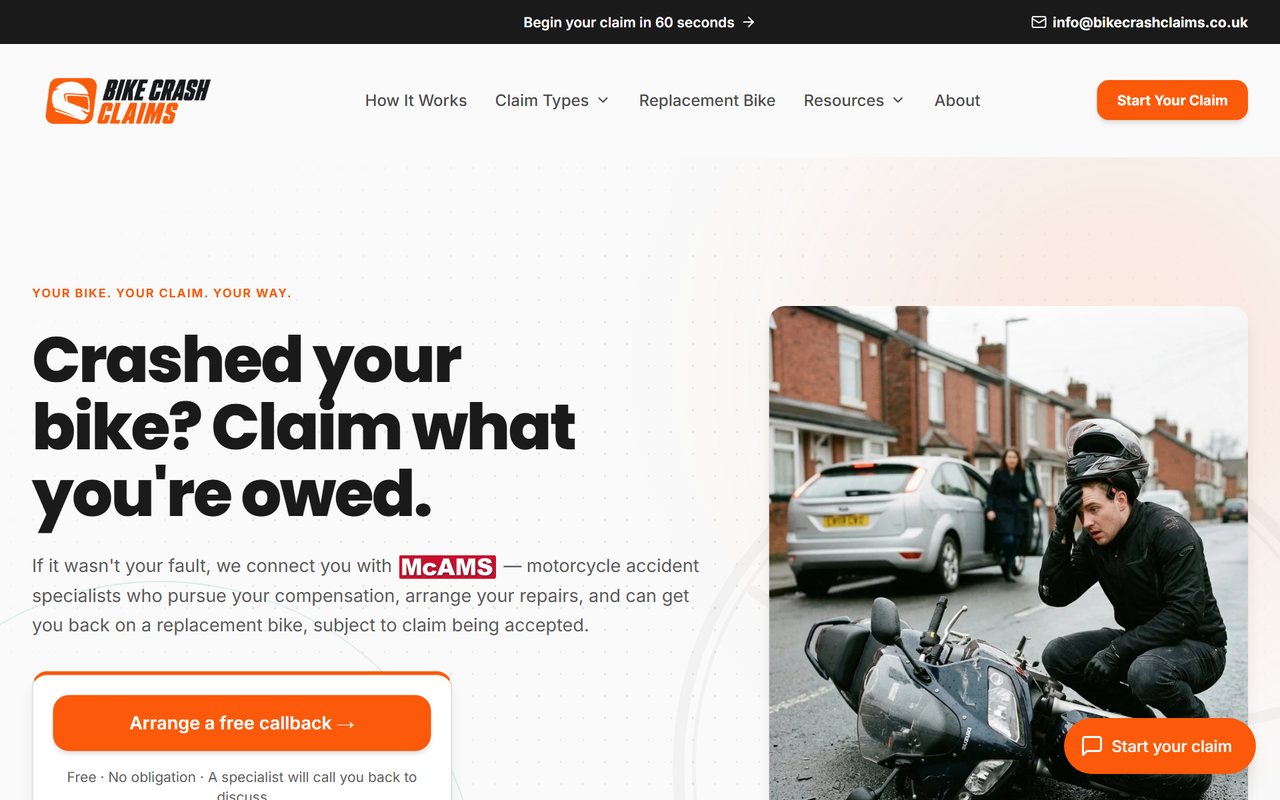
The start: fast growth is worthless if the claims aren’t true
Bike Crash Claims connects motorcyclists who’ve had a non-fault accident with regulated partner firms who pursue their compensation, arrange the repairs and can get them back on a replacement bike.
Crucially, it’s an introducer. Not a law firm, not regulated itself. Which makes one thing completely non-negotiable: everything the site says has to be accurate.
The site we inherited had three problems, and the third was serious.
It was slow. The page was assembled in the visitor’s browser rather than delivered ready-made, which is a poor start for search and a worse one for someone on patchy signal at the roadside.
It was thin. Not enough content to answer what riders actually search for, and therefore not enough for Google to rank.
And it was overclaiming. The hidden data behind the pages presented the business as a local firm in eleven different cities, and stamped a fake “last updated” date on every page.
In a regulated, trust-sensitive market that last one isn’t a marketing weakness. It’s a liability. The brief was to be genuinely findable and convert well, without a single overclaim.
The middle: what we actually built
1. Eighty pages that answer what riders actually ask
Claim-type pages, richly written accident-scenario articles, 22 location pages and 21 guides — over 80 pages in all.
In legal work, people search their exact situation. Not “motorcycle claim” but what happens when a car pulls out of a junction, or whether a claim is still in time, or what happens to the bike while a case runs. The firm that has genuinely written about their circumstance is the one that gets the call.
2. Fast enough for someone standing at the roadside
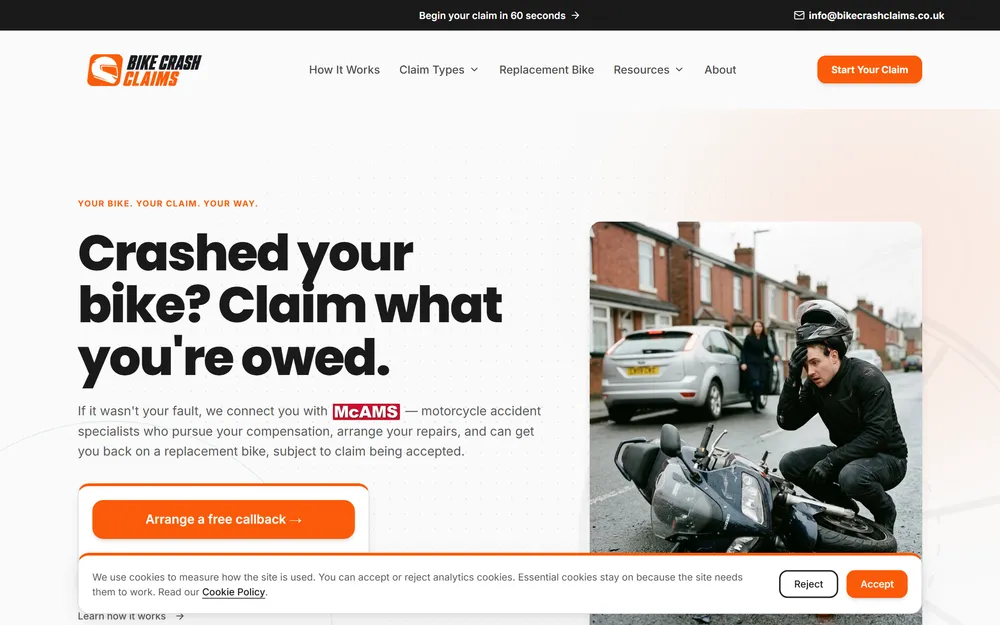
Every photo was re-compressed and the pages are delivered ready-made, so the site now loads in about a second and a half on mobile data.
That’s not a technical vanity point. Your reader may be standing next to a damaged bike, on one bar of signal, still shaken, deciding whether it’s worth the effort. A slow site loses them right there.
3. Tell Google the truth
The most valuable work on this project was subtraction.
Behind every page sits a hidden summary telling search engines what the business is. The old one claimed to be a local business in eleven separate cities and faked a freshness date on everything. We tore all of that out and replaced it with the plain truth: one business, these are the areas it covers, these are the services.
Then we added the honest detail that genuinely helps — the guides, the questions and answers, the step-by-step pages. Accuracy here isn’t just good practice; in a regulated market it’s the entire reputation of an introducer.
4. Be the answer an AI assistant gives
Riders increasingly ask an assistant before they ask anyone else.
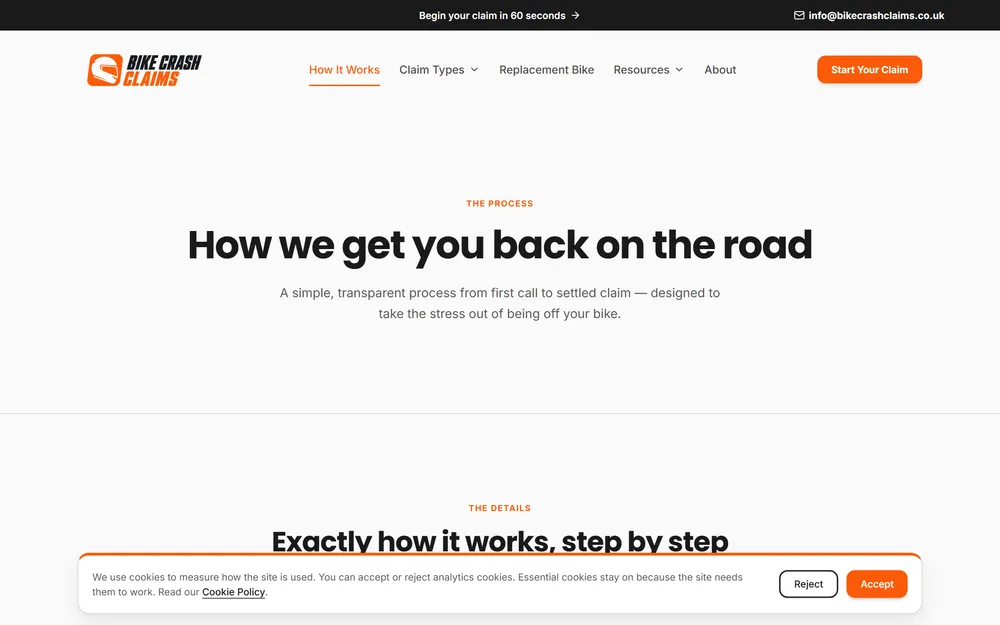
So we left those assistants a plain-English file setting out exactly what the business is and isn’t, invited their crawlers in rather than blocking them, and wrote straight answers they can quote. Being described accurately by an AI matters more in regulated work than almost anywhere else — a confident, wrong summary of who you are is a genuine problem.
The location pages carry coverage maps drawn directly on the page rather than pulled from a mapping service, so nothing calls a third party before the visitor has consented to anything.
5. A conversion path that respects the rules
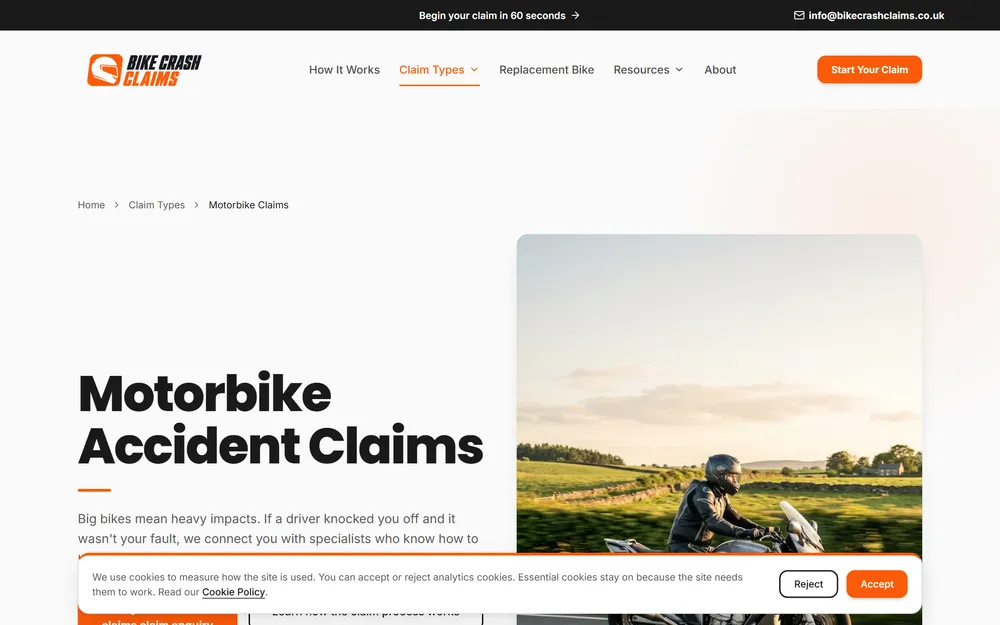
Enquiries run through a clean three-step form with spam protection, and consent is captured at submission — the exact wording the rider was shown is stored with a timestamp against their enquiry.
A jurisdiction step routes England and Wales enquiries to the regulated partner and keeps others on-site. Nothing tracking fires before the visitor agrees.
And there’s no fake urgency anywhere: no countdown timers, no invented case values, no pressure. In a market full of aggressive claims marketing, sounding calm and accurate is a real competitive advantage.
The end: what it left them with
- 80-plus pages answering the questions riders genuinely search.
- About a second and a half to load on mobile data, where it matters most.
- Zero cookies set before a visitor says yes.
- Zero claims on the site the business can’t stand behind — the false local-business markup and faked dates are gone.
- A site AI assistants can describe correctly, which in regulated work is worth more than a ranking.
If you run a firm where accuracy is regulated and the marketing still has to work, tell us what you need and Harry will come back to you personally. It’s the standard we bring to trust-sensitive professional services: be accurate, be found, and never overclaim. If you are a law firm weighing up a rebuild, web design for solicitors shows three live regulated-firm sites we have built and what each one had to get right.