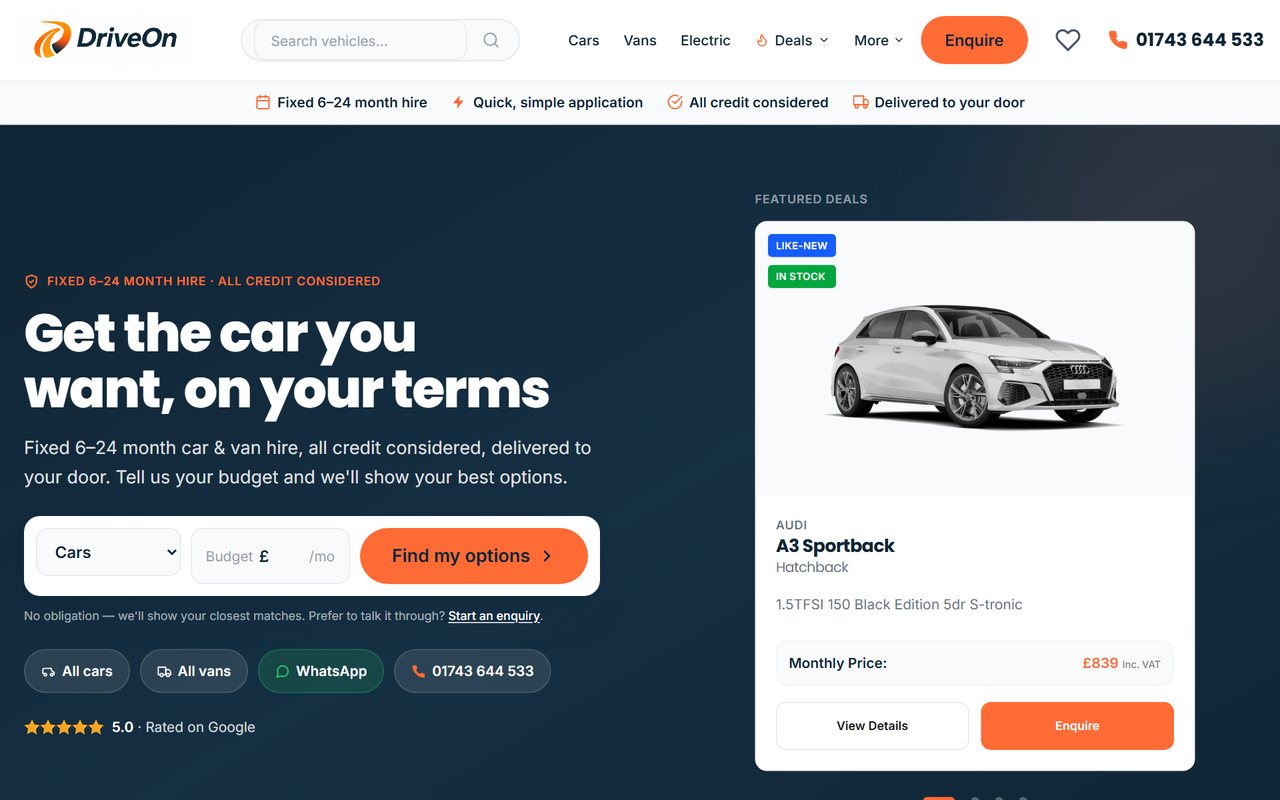
The start: a growing fleet and a website that couldn’t keep up
DriveOn Vehicle Rental, part of KR Automotive Group, hires cars and vans to consumers and businesses alike. The fleet was growing. The website was a brochure.
In rental, that’s a genuine commercial problem rather than a cosmetic one:
- Stock changes daily. Anything hand-listed is wrong within a day — either advertising a van that’s already out, or hiding one that’s sitting on the forecourt earning nothing.
- Enquiries arrive at all hours. People sort out a hire car in the evening, after work, at the weekend. An enquiry that waits until Monday has usually already been answered by somebody else.
- Leads went cold quietly. Without follow-up, an enquiry that wasn’t ready to book that week simply vanished.
- Business customers had nowhere to go. Corporate hire has different terms, different approvals and different expectations, and a consumer page doesn’t serve them.
The middle: what we actually built
1. Stock that lists itself
Vehicles come straight from the stocking system onto the website, each with its own page. Add a van and it appears. Hire it out and the listing reflects it.
Nobody re-types anything, nothing is advertised that can’t actually be supplied, and the fleet can keep growing without adding a daily admin job.
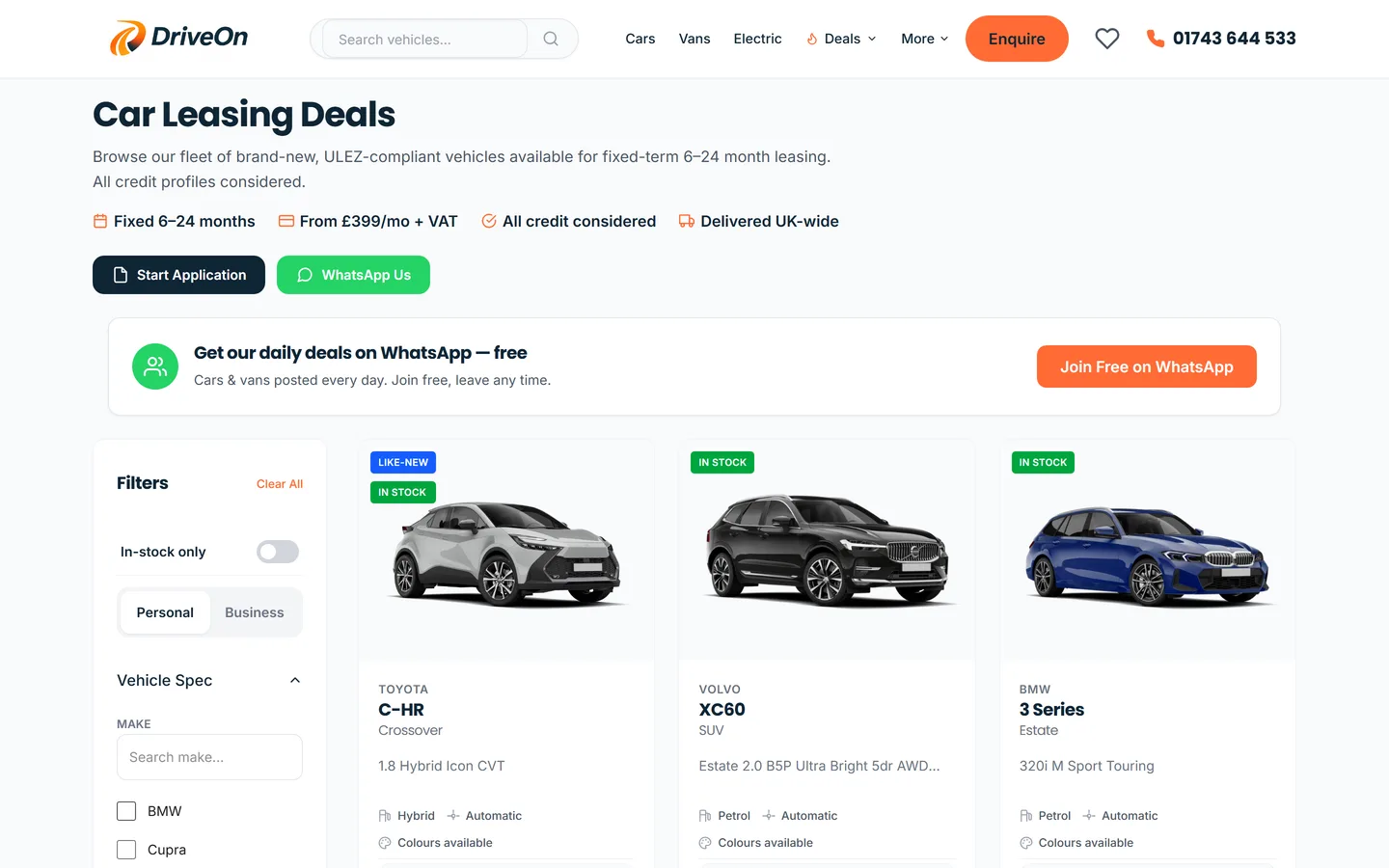
2. Let people narrow it down the way they think
In-stock only. Personal or business. Make, body type, fuel, budget.
Somebody who needs an automatic seven-seater available this week can get to it in seconds. Without filters they scroll past forty vehicles that don’t fit, decide you haven’t got what they want, and leave.
3. Answer instantly, at any hour
An AI assistant trained on the actual business handles the questions that arrive at eleven at night: is it available, will my credit be a problem, can you deliver, what does it cost.
In hire, the business that answers first usually gets the booking. This one always answers first.
4. Serve the customers everyone else ignores
Three of the strongest pages on the site aren’t about car hire in general at all — they’re about business leasing, hire for people with poor credit, and seven-seaters.
They’re specific, high-intent searches with a fraction of the competition. Someone typing “bad credit car hire” knows exactly what they need and is usually ready to act. Being the site that speaks to them directly is worth more than another generic page.
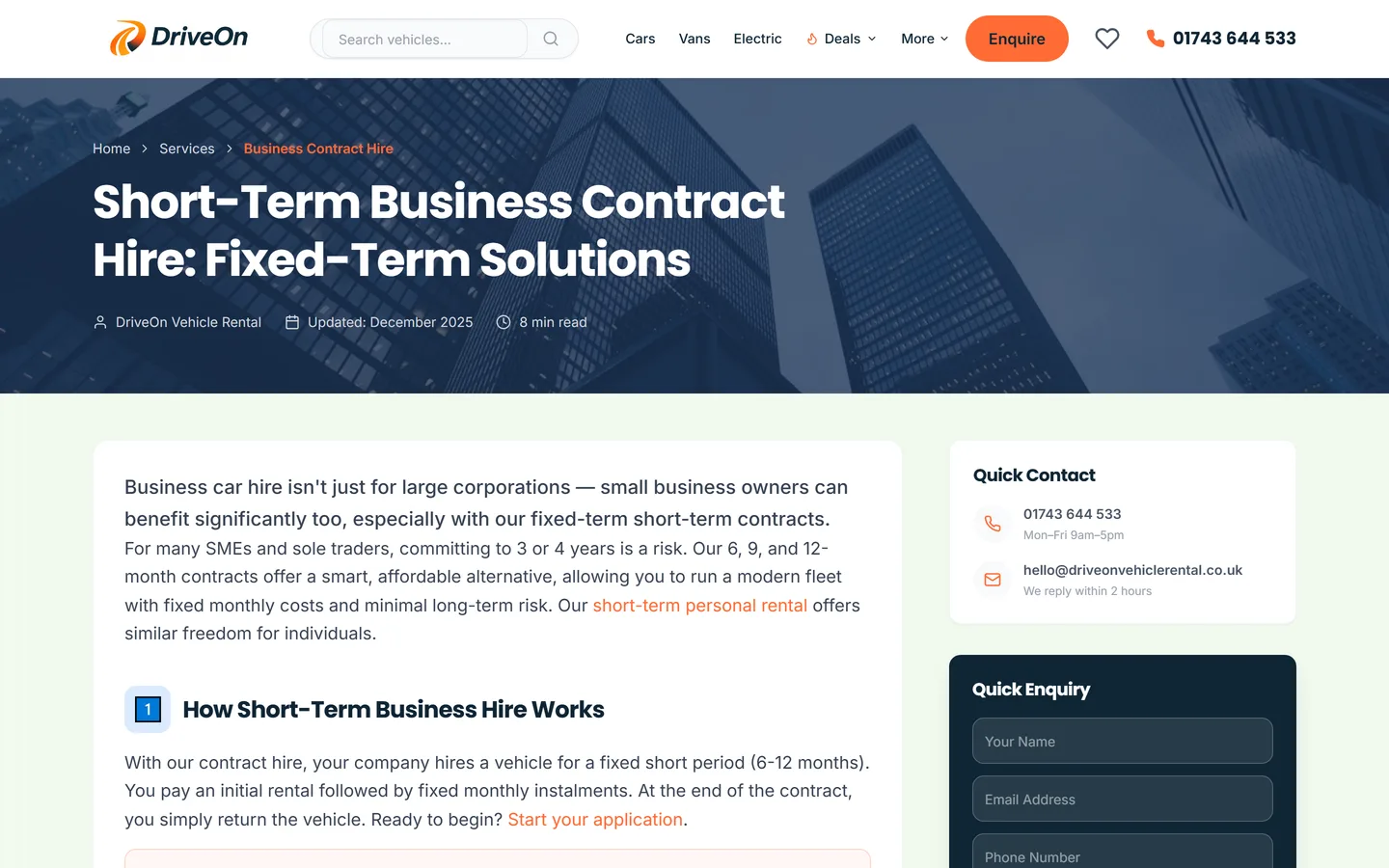
5. Turn one enquiry into an ongoing audience
Alongside the site there’s a free WhatsApp community with vehicles posted daily.
It’s a small idea with a big effect: instead of paying for a click, losing the person, and paying again next month, you keep an audience you can reach whenever new stock lands.
6. Follow up without relying on anyone remembering
Automated email keeps every enquiry warm and moving.
Most hire businesses lose more deals to silence than to price. Somebody who wasn’t ready in March is often ready in May — but only if you’re still there.
The end: what it left them with
- Over 500 enquiries between February and June 2026.
- £10 a day of Meta spend behind all of it.
- 64 vehicles out on hire as of June 2026, on the way to a target of 300 by the end of 2027.
- Three major national contracts, won through the corporate route, in the director’s words below.
- Competitors asking for the same thing. Other operators in the sector now want this setup.
If you hire out vehicles, plant or equipment and your website can’t show what’s actually available, tell us what you need and Harry will come back to you personally. It’s what we bring to the whole automotive and vehicle rental sector: make booking effortless, answer instantly, and never let an enquiry go cold.
Our inventory moves faster now because customers can actually find what they're looking for. The corporate portal has secured us three major national contracts.