The start: good at the job, invisible next to the big names
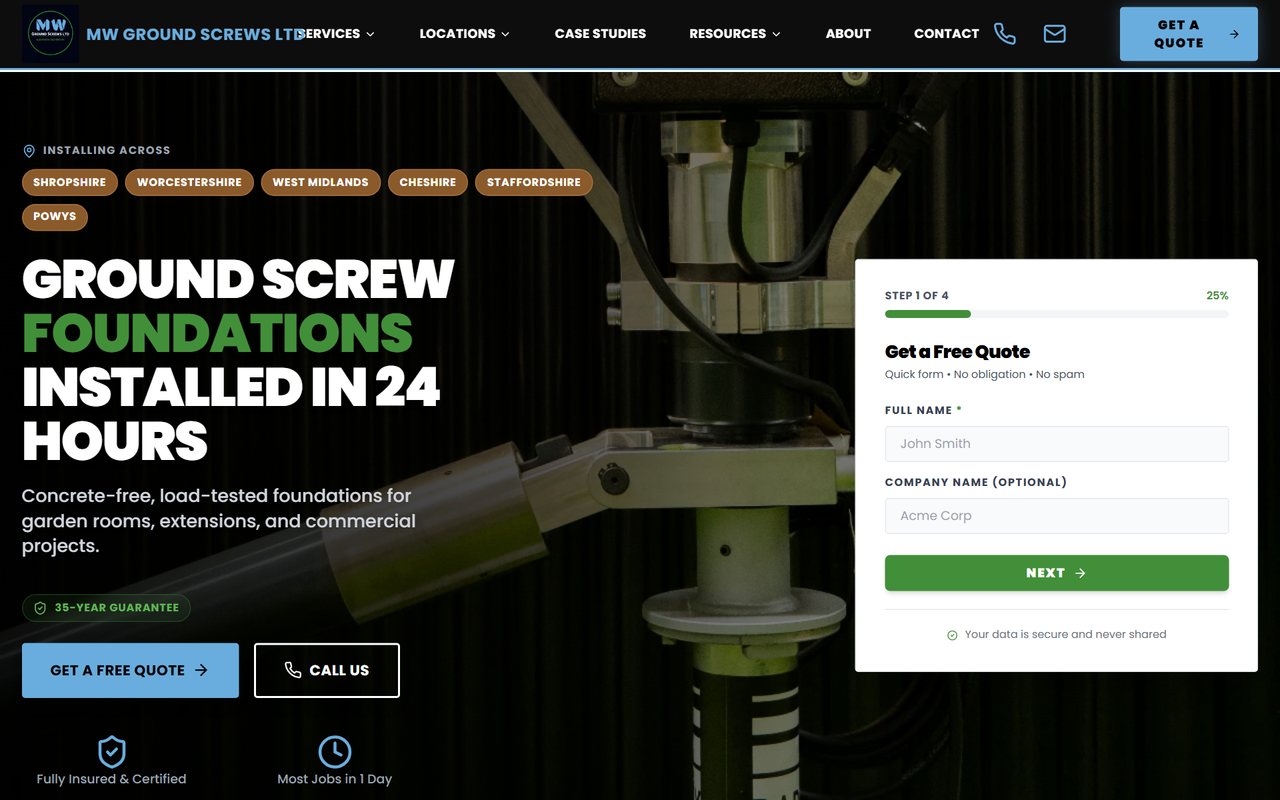
MW Ground Screws installs ground-screw foundations — a fast, reliable, lower-impact alternative to pouring concrete, used across construction and outdoor projects.
They are genuinely good at it. The problem was that nothing about their digital presence said so, and this is a small, technical market dominated by larger, PLC-style rivals with budgets to match.
That combination is brutal for a smaller firm:
- The high-intent enquiries were going elsewhere. Not because MW couldn’t do the work, but because they weren’t the name that came up.
- There was no appetite for a long, expensive brand campaign. It had to work from day one, not “give it six months and see”.
- Technical buyers are risk-averse. A specifier choosing foundations is picking something that has to stay standing. If a company looks small or uncertain, it doesn’t make the shortlist.
The middle: what we actually built
1. Put the credibility where nobody can miss it
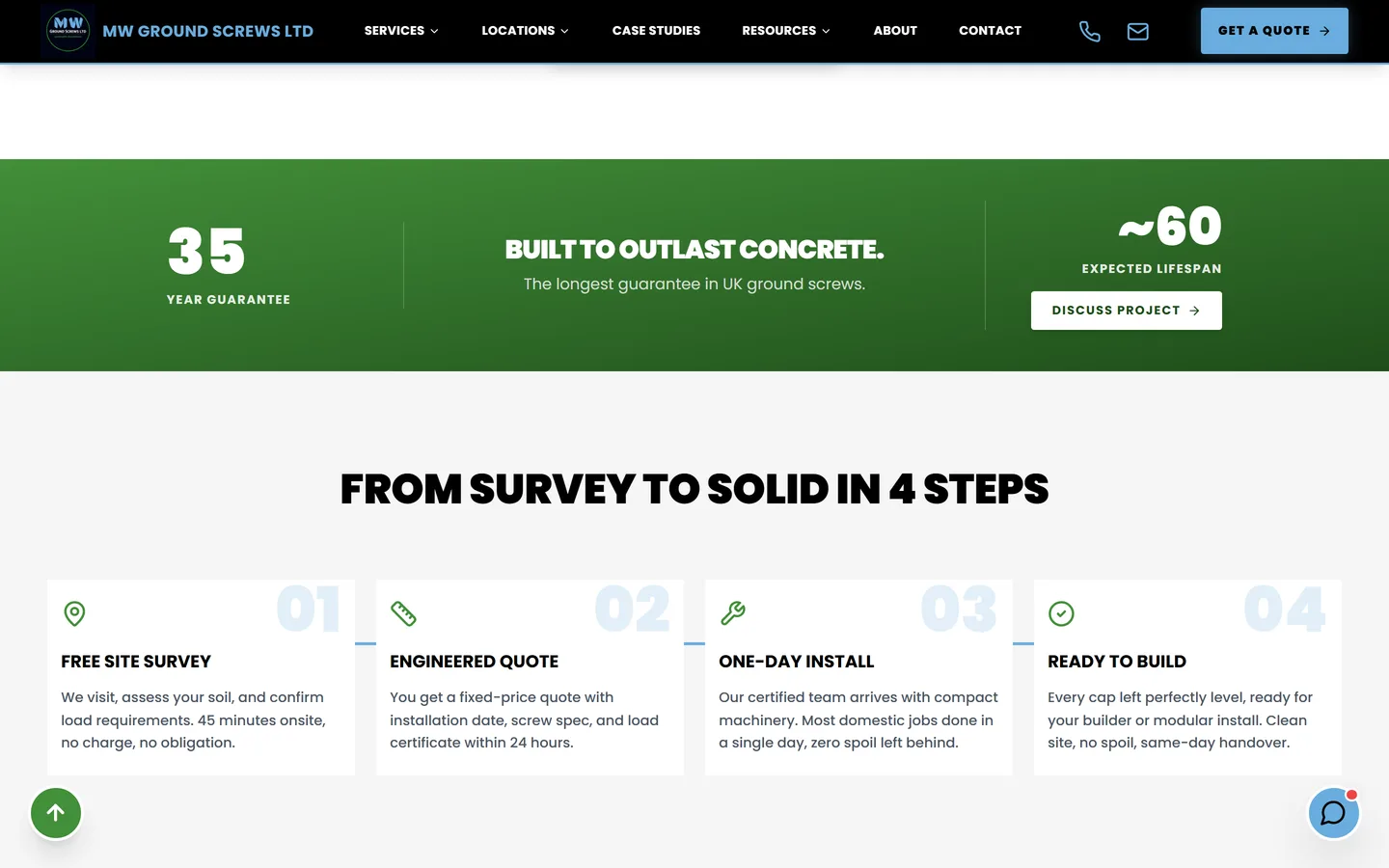
The guarantee, the expected lifespan and the standards are stated in plain numbers, high on the page, before any sales language.
When you’re the smaller name, looking substantiated beats looking slick. A 35-year guarantee stated as a fact does more work than a page of adjectives.
2. Remove every unknown from the process
Free site survey, engineered quote within 24 hours, one-day install, ready to build — each step spelled out with what actually happens and how long it takes.
Risk-averse buyers don’t object to the price nearly as often as they object to uncertainty. Answering “what will this actually be like?” before they ask removes most of the hesitation.
3. Be specific where the big firms are generic
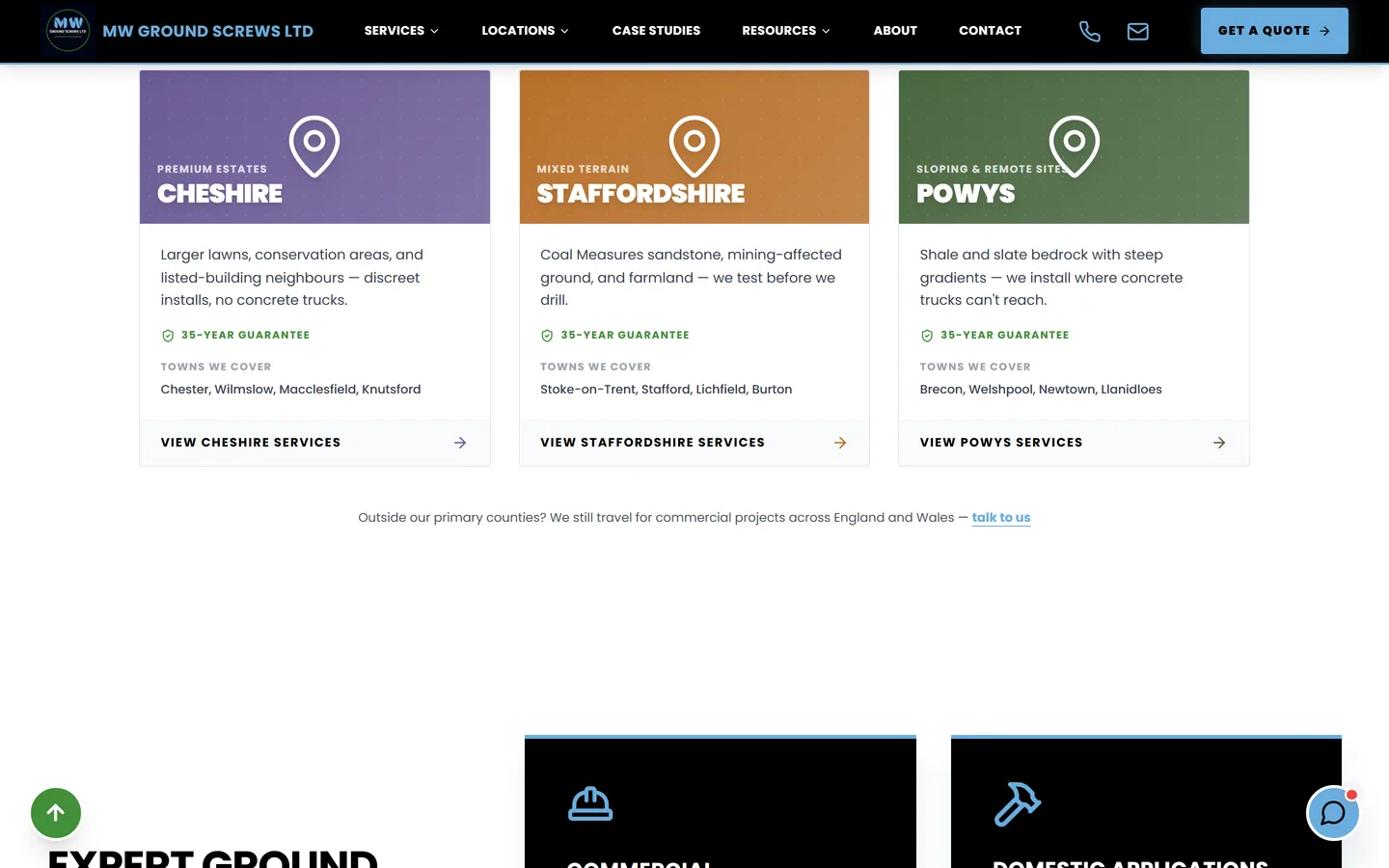
Rather than one page about foundations, the site covers each service and each area properly, written the way specifiers actually search.
In a niche market the specific searches are the valuable ones, and they’re precisely the ones the national names can’t be bothered to write for. That’s the gap a smaller firm fits through.
4. Spend advertising money only on people already looking
The paid search campaign is deliberately narrow: shown only to buyers actively searching for ground screws and closely related work.
No brand awareness. No broad targeting. Nothing shown to people who were never going to buy. That discipline is precisely how a small budget outperforms a large one spent carelessly.
5. React in a day, not a month
When the first audience started to dip, we researched an alternative, agreed it with the client and had it live within 24 hours of their feedback.
Daily enquiries then ran at roughly three times the previous rate. The setup matters, but noticing and reacting fast is what stops a month of budget disappearing.
The end: what it left them with
- Over 30 enquiries in the first month, from a standing start in a niche market.
- Around £9 an enquiry on paid search, from buyers already looking for exactly this.
- Enquiries from search on day two — before the ads had done any real work.
- Roughly three times the daily enquiries after a 24-hour change of direction.
- Out-ranking much larger rivals in their area, converting organically rather than leaning on spend.
Tellingly, the client’s feedback was about the speed, knowledge and support as much as the numbers.
If you sell something technical against firms far bigger than you, tell us what you need and Harry will come back to you personally. The right website plus disciplined paid search beats a bigger budget spent badly — reliably, and for a lot less money.