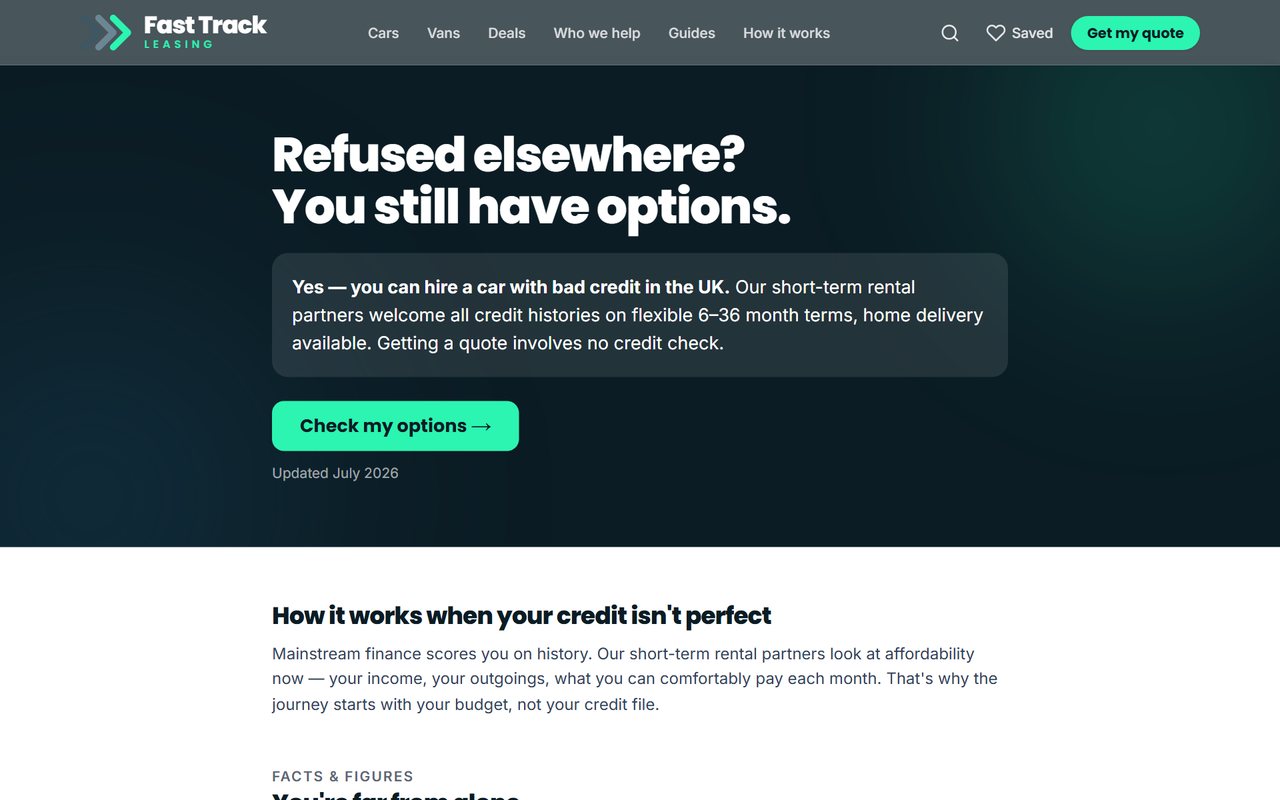
The start: a lean team, an expensive market and a mountain of admin
Fast Track Leasing introduces UK drivers to short-term vehicle leasing and rental — typically six to thirty-six months — nationwide from its base in Telford. It’s an introducer rather than the supplier itself.
That business model creates a very specific squeeze.
Demand starts with a search. Vehicle leasing is crowded and high-intent, and most of it now begins with Google or, increasingly, an AI assistant. If you aren’t in that answer, you’re left paying to interrupt someone instead.
The visitor is on a phone, in a hurry. They decide fast, on a small screen, usually with something else going on. A long form is fatal.
And a lean team can drown in onboarding. Even when the leads arrive, turning an enquiry into a completed application traditionally means chasing documents, re-keying details and endless follow-up. Win more and you simply create more admin.
The brief was easy to state and hard to do: bring the leads in for free, and make the onboarding disappear.
The middle: what we actually built
1. Four hundred pages that are actually worth reading
Not a brochure — a content engine. A 300-plus vehicle catalogue, credit and affordability guidance, location pages, audience-specific landing pages and a library of buyer guides. Over 400 pages, each with real, unique content.
That’s the unglamorous truth about being found for free: you have to genuinely be the most useful answer on hundreds of specific questions, not just claim to be.
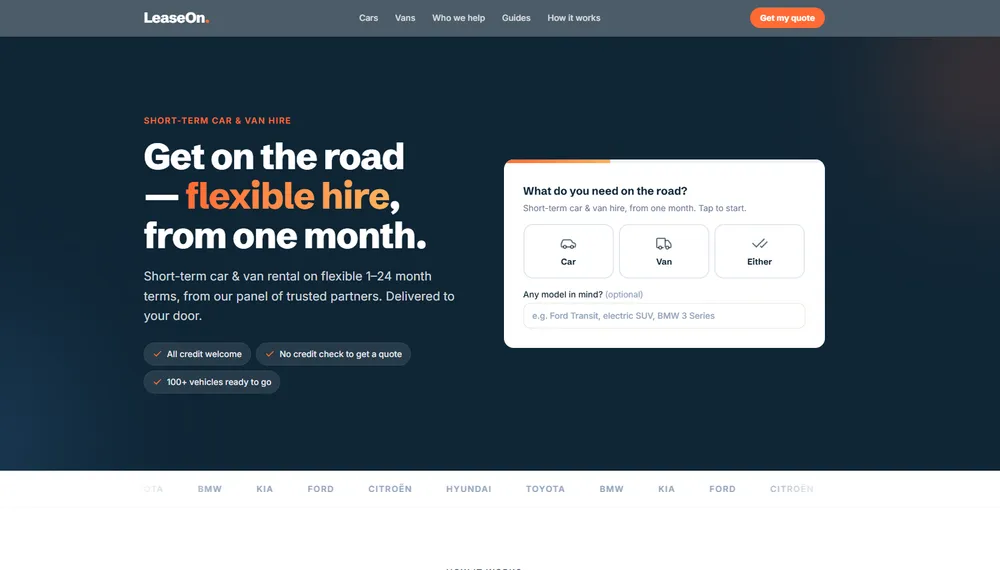
2. Written so an AI assistant can quote it
Every page opens with a short, direct answer to the question it’s about, under headings phrased the way people genuinely ask them.
That opening line matters more than it looks. When someone asks an assistant to recommend a leasing broker, the reply is assembled from clear, quotable statements. Pages that begin with a straight answer get used. Pages that begin with marketing throat-clearing get skipped.
We also left those assistants a plain-English map of the site and deliberately invited their crawlers in, rather than blocking them — which a surprising number of sites still do by accident.
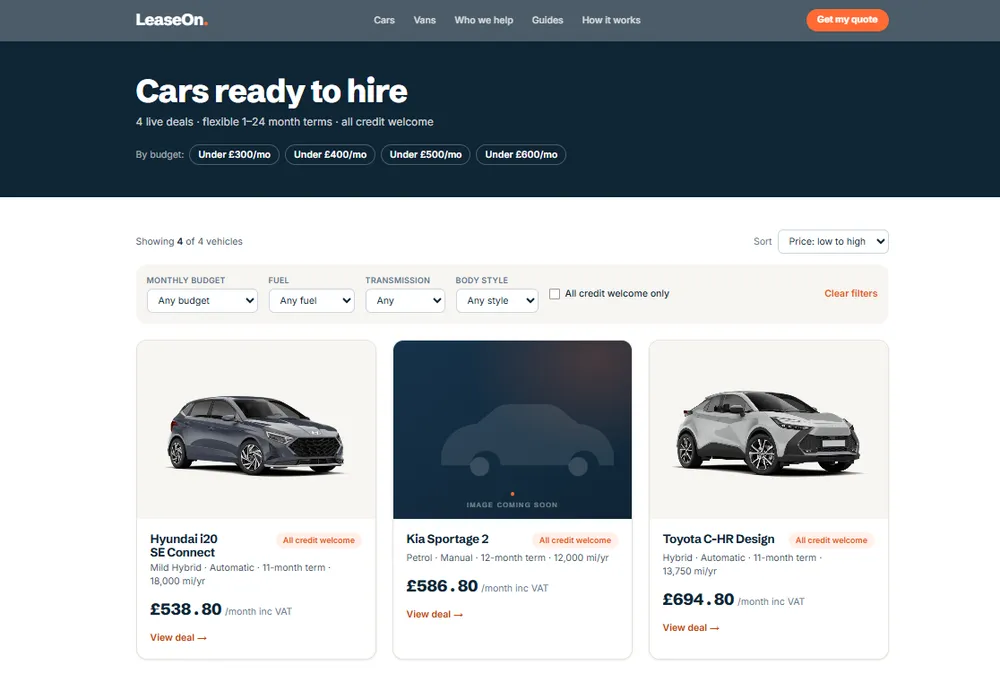
3. Bank the enquiry at the first tap
The visitor picks what they need through a simple set of choices, and the enquiry is captured the moment they engage — not at the end of a long form they might never finish.
It’s a small change in sequencing with a large effect on how many people you actually hear from.
4. Make the application fill itself in
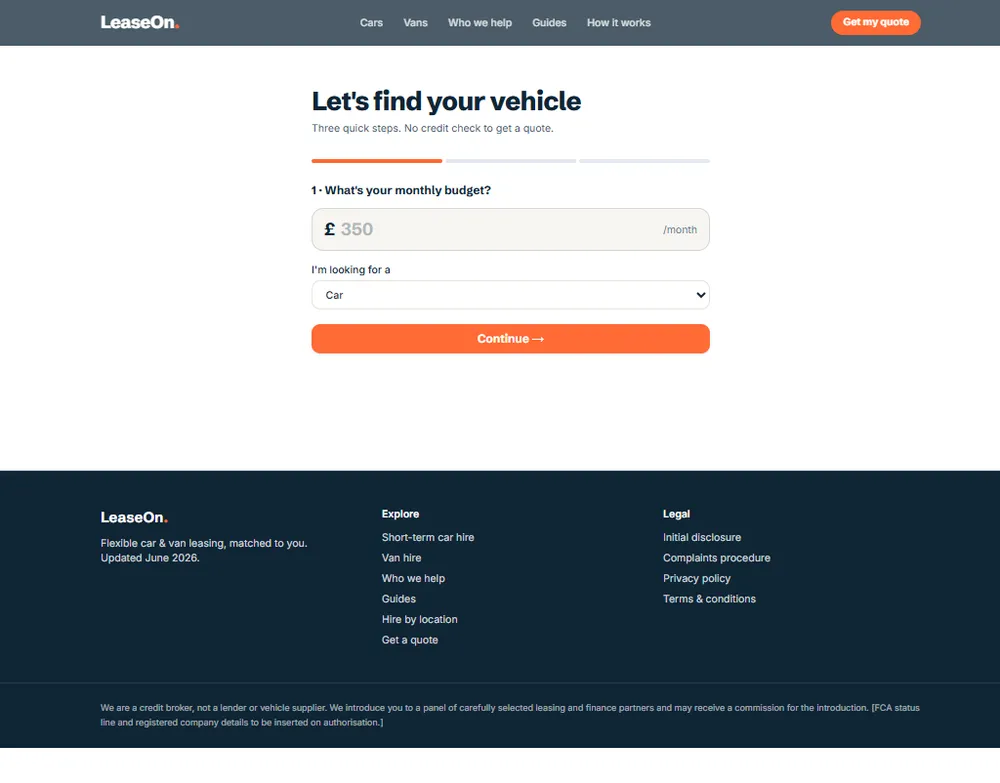
What they’ve already told you flows straight into a pre-filled application. Nobody re-types anything.
Then every remaining drop-off point got engineered away, one at a time:
- Postcode lookup instead of hand-typing an address.
- One essential document required up front; the rest can follow later.
- A typed-name signature instead of a fiddly drawn one on a phone screen.
- An optional phone field, so a blank box never blocks a submission.
None of these are clever. Together they’re the difference between an application people finish and one they abandon.
5. Give the small team its life back
Behind the scenes, one back office is the single source of truth. Every enquiry and application lands there automatically with the qualifying detail attached, linked through to partners for hand-off.
Branded acknowledgements and a nurture sequence send themselves, the team gets an instant alert, and a WhatsApp deals community gives Fast Track a direct line to interested customers that no algorithm can switch off.
The point of all of it is focus: an enquiry becomes an application with barely a keystroke, so the team spends its time on customers rather than paperwork.
6. Only then, add paid — measured properly
With the free channel compounding, paid media is being layered on top, deliberately in that order.
The strategy is grounded in real unit economics with a defined target cost per lead, and conversions are reported from the server as well as the browser, so what gets optimised is completed applications rather than clicks that happened to survive an ad-blocker. No budget scales until the funnel is proven end to end.
The end: what it left them with
- Around five enquiries every day from search.
- £0 of ad spend behind them.
- Enquiries that become applications on their own, with barely a keystroke from the team.
- An owned audience on WhatsApp, independent of any platform’s algorithm.
- A paid channel now being added on top of a funnel that’s already proven.
If you’re a broker or introducer paying for every lead and buried in onboarding admin, tell us what you need and Harry will come back to you personally. It’s the model we bring across the automotive and vehicle-rental sector, built to the same standard as its sibling business, DriveOn Vehicle Rental: be the answer people find, make enquiring effortless, and let the system do the chasing.